
7 Signs Your AI Oversight Program Will Fail a Regulatory Audit
October 26, 2026
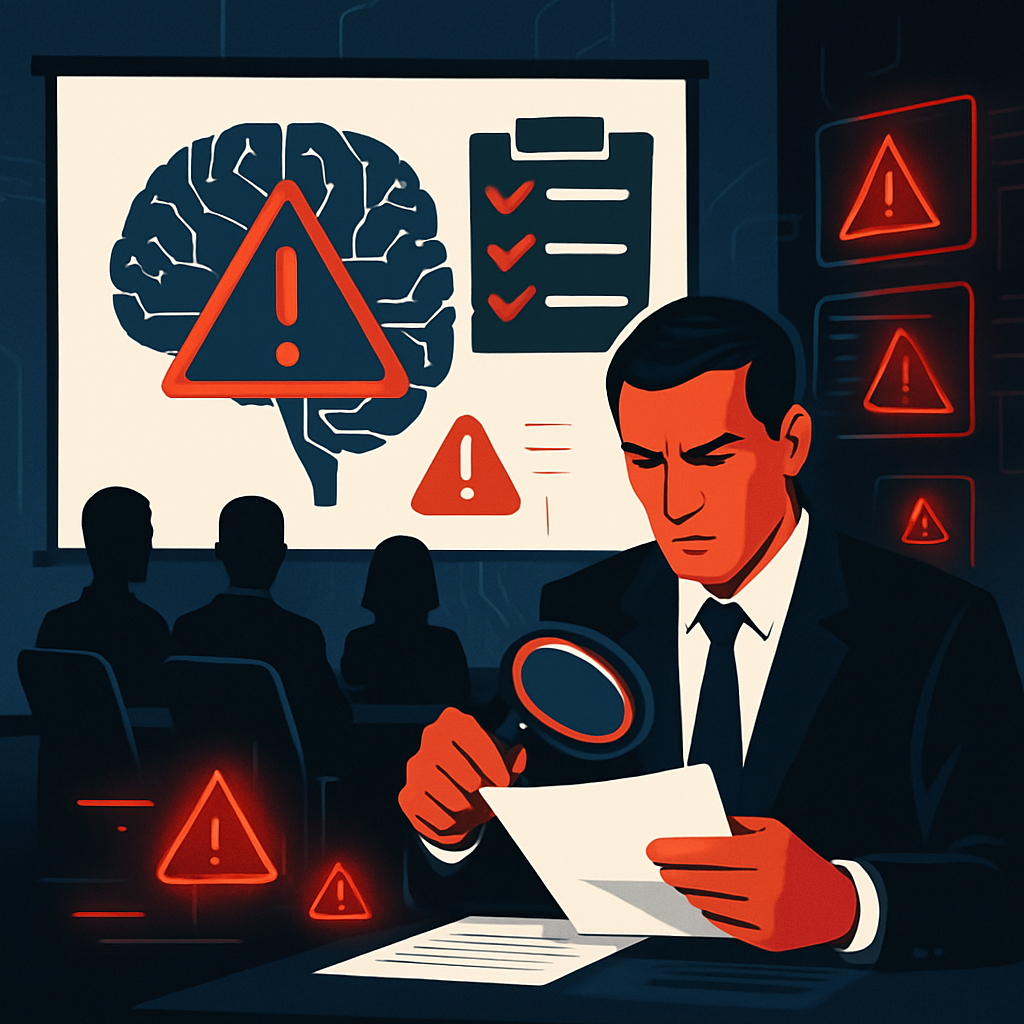 Regulatory enforcement actions tied to AI governance are surfacing publicly, and most organizations have the same gaps. These seven signs reveal whether your AI oversight program will hold up when examiners start asking hard questions about overseer competency and documentation.
When Regulators Come Looking, These Gaps Get Organizations in Trouble
AI oversight program regulatory audit failure signs are showing up in enforcement actions and examination findings across financial services, healthcare, and federal contracting. Regulators are no longer satisfied with policy documents. They want evidence that the humans responsible for supervising AI systems are actually qualified to do so, and that someone can prove it. Most organizations cannot. Here is what the gaps look like from the inside.
Sign 1: Overseers Were Designated, Not Trained
Many organizations assign AI oversight roles by job title or seniority. A senior manager becomes the designated AI overseer because the role seemed like a natural fit. The problem is that designation and competence are not the same thing.
When an auditor asks what training that person completed, what they demonstrated they could do, and when they were last assessed, the answer is usually a blank stare followed by a reference to a general compliance onboarding module from two years ago. That is not oversight. That is an org chart entry.
Sign 2: Training Records Cannot Be Traced to Specific AI Systems or Roles
Generic training records are nearly worthless in a targeted audit. Regulators increasingly want to see that training was relevant to the specific AI systems a person oversees, not just "AI awareness" content that could apply to anyone in any organization.
If your records show that someone completed a course called "Introduction to Artificial Intelligence" but cannot show what AI decisions they are responsible for reviewing, that training record will not satisfy an examiner. The link between the training content, the oversight role, and the live system has to be traceable.
Sign 3: No Defined Scope for What Each Overseer Is Responsible For
Vague oversight is unauditable oversight. When an organization cannot clearly state which person is responsible for which AI system, which decisions that system makes, and what the overseer's specific duties are, the entire oversight program falls apart under scrutiny.
Auditors will ask pointed questions:
- Who is the designated overseer for this system?
- What decisions does this system make without human review?
- What triggers a human intervention?
- Who makes that call?
If roles and responsibilities exist only in someone's head or in a document that has never been updated since the system went live, the organization is exposed.
Sign 4: Recertification Has Never Happened
AI systems change. Models get updated, thresholds shift, new data sources are added. An overseer who was competent when a system launched in 2022 may be working from an outdated mental model of how that system behaves today.
A one-time training event is not a recertification program. Regulators looking at mature AI governance frameworks expect organizations to demonstrate that overseer competency is maintained over time, especially when the underlying system changes. If no recertification has ever occurred, that is a finding waiting to happen.
Sign 5: The Audit Trail Is Incomplete or Reconstructed After the Fact
Documentation assembled in the weeks before an audit is easy for experienced examiners to spot. Timestamps do not match. Version histories are thin. Records reference events that the system logs do not corroborate.
A credible audit trail shows continuous, contemporaneous documentation of oversight activity: who reviewed what, when they reviewed it, what they found, and what action they took or did not take. If that record only exists during audit season, it is not a real compliance record.
Sign 6: Oversight Accountability Sits with One Person and No Backup Exists
Some organizations build their entire AI oversight program around a single individual, often the person who championed AI adoption internally. When that person leaves, transfers, or is on leave during an exam, the program effectively does not exist.
Regulators expect oversight programs to be institutional, not individual. If the answer to "who else can speak to this?" is "no one right now," that tells an examiner a great deal about how seriously the organization treats the function.
Sign 7: There Is No Evidence Overseers Actually Intervened
This is the most telling gap of all. An oversight program where the overseer has never flagged an issue, never escalated a concern, and never documented a review finding is not a functioning oversight program. It looks like a checkbox exercise.
Regulators understand that AI systems do not behave perfectly. They expect overseers to catch things. If the records show nothing but approvals with no notes, no escalations, and no corrections over months or years of operation, the examiner's reasonable inference is that no one was actually watching.
Documenting genuine oversight activity, including cases where the system performed as expected, requires the overseer to articulate why they reached that conclusion. That reasoning, captured in real time, is what distinguishes competent oversight from rubber-stamping.
What These Signs Have in Common
Each of these failure patterns comes back to the same root cause: organizations treated AI oversight as a policy question rather than a competency question. Writing a policy is straightforward. Demonstrating that the people named in that policy actually know what they are doing, can prove they were trained, and have records showing they did their job is a much harder problem.
Regulatory examiners are getting better at asking exactly those questions. The organizations that will fare well in AI-related audits are the ones that can produce documented, traceable evidence of overseer competency at any point in time, not just during an exam window.
Vigilimate AI is built specifically for this problem. It provides the training, certification, recertification tracking, and audit-ready documentation that organizations need to demonstrate that their AI overseers are qualified and active, not just assigned. If your program has any of the signs listed here, reach out to the Vigilimate AI team to start a conversation about what a defensible oversight program looks like.
Tags