
Why AI Oversight Is a Whole Product Problem—Not a Feature
October 14, 2026
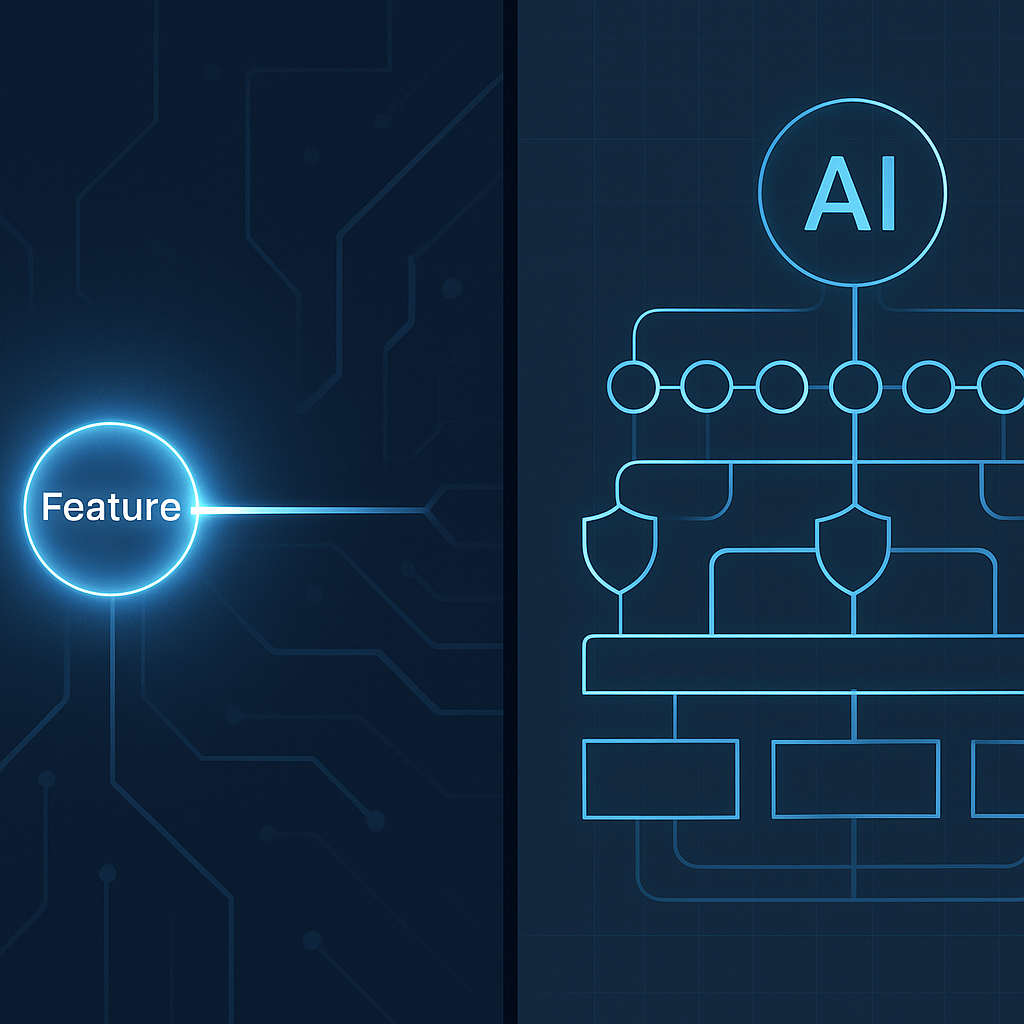 Major AI vendors are shipping oversight features, but a feature built into a general-purpose platform cannot establish, certify, or document the human competency that genuine AI oversight requires. This post explains what a purpose-built oversight layer must do end to end.
Bolting Oversight onto a Platform Produces a Partial Solution
The AI oversight product vs feature debate has moved from academic to urgent. Several major LLM platform vendors have announced oversight capabilities in recent months, framing them as natural extensions of what they already offer. The additions are real, but they are additions. A toggle in a settings panel, a logging module, a compliance checklist layered on top of a general-purpose AI system does not constitute oversight. It constitutes coverage, and coverage has gaps.
This distinction matters because the organizations deploying AI are now accountable for what that AI does. Regulators, boards, and auditors are not asking whether oversight exists somewhere in the stack. They are asking whether the humans responsible for supervising AI decisions are actually competent to do so, and whether there is a documented record proving it. A feature does not answer that question. A product built around that question can.
What a Feature Can and Cannot Do
A feature operates within the logic of the product it lives in. An LLM platform's oversight feature is designed to make the platform easier to audit, not to make the people using the platform more qualified to supervise it. Those are different problems.
Consider what a typical vendor oversight feature actually covers:
- Logging prompts and outputs for review
- Flagging responses that fall outside a predefined policy boundary
- Generating usage reports for compliance teams
- Providing role-based access controls to limit who can interact with the model
Each of these is useful. None of them establish whether the person reviewing the log, acting on the flag, reading the report, or holding the access permission actually understands what they are looking at. Human oversight is not a setting. It is a capability that must be built in people, tracked over time, and verified when circumstances change.
A feature also tends to be version-dependent. When the platform updates, the feature updates. When the platform is deprecated or swapped out, the oversight record goes with it. That is not a stable foundation for an audit trail that regulators or liability insurers may ask to inspect years later.
The AI Oversight Product vs Feature Question in Practice
Think about how an organization would respond to a serious AI-related incident. A supervised AI system makes a consequential decision. Something goes wrong. The investigation begins.
The first questions are predictable: Who was responsible for supervising this system? What training did that person have? When was their competence last verified? Was the oversight structure appropriate to the risk level of this application?
A feature log can show what the system did. It cannot show that the supervisor was trained, certified, and current. It cannot show that the oversight process was designed for the specific risk profile of that deployment. It cannot produce a structured audit trail that maps individual human accountability to individual AI decisions over time.
A purpose-built oversight layer is designed precisely to produce those things, because they are the things that matter when accountability is tested.
What a Purpose-Built Oversight Layer Must Actually Do
An oversight product built end to end addresses a connected set of problems, not a single one. Here is what that coverage looks like in practice.
Training that is specific to the role
Generic AI literacy training does not prepare a procurement manager to supervise an AI system making vendor selections, or a clinician to supervise a diagnostic support tool. Purpose-built oversight connects training content to the actual domain, risk level, and decision type involved. The question is not whether someone attended a module. It is whether they can recognize and act on the failure modes relevant to their specific context.
Certification with a defined standard
Training without a pass/fail threshold is awareness, not certification. A complete oversight product establishes what competence looks like, tests for it, and records the result. This creates a defensible record: on this date, this person demonstrated this level of competence to supervise this class of AI application.
Recertification tracking as the landscape changes
AI systems change. Regulations change. The risk profile of a deployment changes as the system takes on new tasks or serves new populations. Oversight competence must be revalidated on a schedule that reflects those changes, not left to expire quietly. A platform feature has no mechanism to prompt recertification when a model is updated or when a new use case is added. An oversight product does, because that is its job.
Audit trails that travel with the organization, not the vendor
Oversight records need to be durable and portable. If an organization changes AI vendors, the record of who supervised what, when, and with what demonstrated competence cannot vanish with the old platform. A standalone oversight layer holds those records independently of the underlying AI infrastructure, which is the only arrangement that makes them reliable for long-term accountability purposes.
Why Vendors Are Not Wrong to Add These Features
Platform vendors adding oversight features are responding to real market pressure. Customers are asking for it. Regulators are signaling that accountability will be expected. The vendors are not being cynical, they are shipping what their development roadmaps allow.
The limitation is structural, not motivational. A platform optimized for model performance and user productivity will build oversight features in service of those goals. Oversight as a primary mission, not a secondary function, requires different design choices from the start.
That structural difference shows up in how deeply the product thinks about the human in the loop. Platform vendors think about that human as a user. An oversight product thinks about that human as a responsible party with a verifiable duty of care. Those are not the same framing, and they produce different tools.
The Risk of Conflating the Two
Organizations that treat a vendor's oversight feature as a sufficient solution take on a specific risk: when something goes wrong, the feature does not provide the evidence they need to demonstrate accountability. The log exists. The certified, trained, currently recertified human supervisor may not be on record.
Regulators drafting AI governance frameworks are increasingly specific about what human oversight means. The EU AI Act, for example, requires that natural persons overseeing high-risk AI systems have the competence, authority, and understanding to actually intervene. A logging feature satisfies none of those requirements. A documented competency program with verified certifications and a clean audit trail addresses all of them.
The organizations that will be in the strongest position when oversight requirements are enforced are the ones that treated oversight as a product problem and built accordingly, rather than checking the vendor's box and moving on.
Building the Case Internally
For teams making the argument internally, the framing is straightforward. Ask what would be produced if regulators requested evidence of human oversight competency tomorrow. If the answer is a platform log and a training completion email, the gap is visible. What is missing is a structured record of who is certified, to what standard, for which applications, with what recertification status.
That is not a feature. It is an operational discipline, supported by a product built to enforce and document it.
Start by mapping which AI applications in your organization carry meaningful risk, then assess whether the humans supervising those applications have documented, current competency in that role. Vigilimate AI is built to close that gap systematically, so reach out to learn how the certification and audit trail framework applies to your specific deployment context.
Tags